
 By
By Introduction
Poker is one of the most popular and enduring card games worldwide, known for its combination of strategy, psychology, and luck. With origins tracing back centuries, poker has evolved into various forms played in casinos, online platforms, and private games. Whether you are a casual player or an aspiring professional, understanding the fundamentals of poker, game variations, strategies, and psychological tactics is essential for success. In this article, we explore poker in depth, providing insights into its history, gameplay mechanics, advanced strategies, and frequently asked questions.
History of Poker
Poker’s origins are widely debated, but it is believed to have evolved from several 17th- and 18th-century card games in Europe and North America. The game gained popularity in the United States during the early 1800s, particularly along the Mississippi River, where riverboats hosted gambling activities. Early poker was played with 20 cards and involved betting rounds similar to modern poker. By the mid-19th century, the game expanded to a standard 52-card deck, and hand rankings like flushes and straights became standardized.
During the 20th century, poker experienced a surge in popularity with the rise of casinos and televised poker tournaments. The World Series of Poker (WSOP), established in 1970, became a significant platform for professional players and contributed to poker’s global recognition. In the 2000s, online poker platforms brought the game to millions of players worldwide, creating a new era of accessibility and competition.
Types of Poker Games
Poker is not a single game but a family of card games with shared mechanics. The most widely played variations include:
Texas Hold’em
Texas Hold’em is the most popular poker variant, especially in tournaments. Each player receives two private cards, and five community cards are dealt face-up. Players must create the best five-card hand using any combination of their private cards and the community cards. This variant emphasizes strategic betting, position, and reading opponents.
Omaha Poker
Omaha is similar to Texas Hold’em but gives each player four private cards instead of two. Players must use exactly two private cards and three community cards to make their hand. Omaha tends to produce stronger hands due to the extra cards, making it a game of high action and complex strategy.
Seven-Card Stud
Seven-Card Stud does not use community cards. Players receive a combination of face-up and face-down cards over multiple betting rounds. Players must form the best five-card hand from their seven cards. Stud is less common in online play but remains a staple in live games.
Five-Card Draw
Five-Card Draw is a classic poker variant often played in home games. Each player receives five cards and has the option to exchange a number of cards for new ones during a draw phase. Success in this variant relies heavily on hand reading and betting strategy rather than community card analysis.
Razz Poker
Razz is a lowball variant where the goal is to make the lowest possible five-card hand. Unlike traditional poker, straights and flushes do not count against the player. Razz requires a completely different strategy focused on minimizing high cards and maximizing potential for low combinations.
Poker Hand Rankings
Understanding poker hand rankings is crucial for effective gameplay. From highest to lowest, standard hand rankings are:
- Royal Flush: A, K, Q, J, 10 of the same suit.
- Straight Flush: Five consecutive cards of the same suit.
- Four of a Kind: Four cards of the same rank.
- Full House: Three of a kind plus a pair.
- Flush: Five cards of the same suit.
- Straight: Five consecutive cards of different suits.
- Three of a Kind: Three cards of the same rank.
- Two Pair: Two separate pairs.
- One Pair: Two cards of the same rank.
- High Card: The highest individual card if no combination is made.
Mastering hand rankings allows players to make informed betting decisions, determine bluffing opportunities, and calculate odds.
Poker Strategies
Successful poker requires a combination of technical skills, probability analysis, psychological insight, and adaptability. Key strategies include:
Starting Hand Selection
The choice of starting hands is critical in games like Texas Hold’em and Omaha. Premium hands such as pocket aces, kings, queens, and AK suited have high winning potential. Conversely, weak hands like low unsuited cards should often be folded, particularly in early positions.
Position Play
Position refers to a player’s seating relative to the dealer button. Being “in position” means acting later in the betting round, giving you more information about opponents’ actions. Strategic play often involves tight and aggressive betting in early positions and wider hand ranges when in later positions.
Bluffing
Bluffing is a psychological tactic designed to mislead opponents about the strength of your hand. Successful bluffing requires careful observation of opponents’ betting patterns, table dynamics, and timing. Over-bluffing can be costly, so it must be used sparingly and strategically.
Pot Odds and Equity
Understanding pot odds is essential for making profitable decisions. Pot odds compare the potential reward to the cost of a call, while equity measures the probability of winning a hand. Calculating these metrics helps players decide whether to call, fold, or raise in uncertain situations.
Reading Opponents
Successful poker players often rely on reading opponents through body language, betting patterns, and timing tells. Recognizing patterns in aggressive or passive play, reaction to raises, and showdowns can provide valuable information for decision-making.
Bankroll Management
Poker is a game of variance, and even skilled players experience losing streaks. Proper bankroll management ensures longevity and reduces emotional decision-making. Players should avoid risking more than a small percentage of their bankroll in a single session or tournament.
Advanced Techniques
Beyond the basics, advanced players use techniques such as:
- Semi-Bluffing: Betting with a drawing hand that could improve in later rounds.
- Float Play: Calling a bet on a weak hand with the intention of bluffing on later streets.
- Check-Raising: Checking initially to induce a bet from opponents, then raising to gain value.
- Exploitive Play: Adjusting strategy to exploit weaknesses in specific opponents’ tendencies.
- GTO (Game Theory Optimal): A mathematically balanced approach to minimize exploitable plays.
Poker in the Digital Era
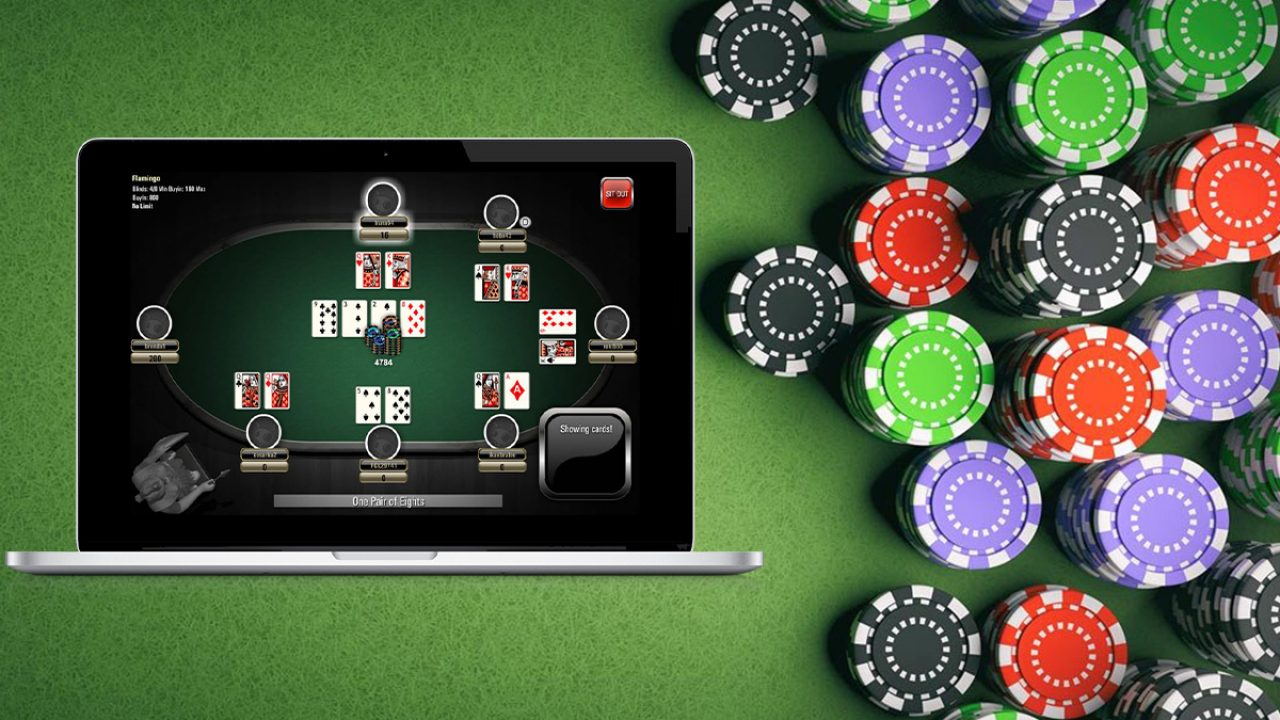
Online poker has revolutionized the game, offering global accessibility, diverse game variants, and 24/7 play. Platforms provide cash games, tournaments, sit-and-go events, and high-stakes tables. Online play also enables tracking of statistics, hand histories, and learning tools to improve strategy. Mobile poker apps further extend convenience, allowing players to engage in multiple games simultaneously.
Poker Etiquette
Whether playing online or live, proper etiquette enhances the experience:
- Act in turn and avoid discussing live hands during play.
- Do not slow roll, which is misleading opponents about the strength of your hand.
- Respect dealers and opponents, maintaining a professional demeanor.
- Avoid excessive celebration or aggressive behavior after winning hands.
Benefits of Playing Poker
Playing poker offers more than potential financial gain:
- Cognitive Skills: Enhances memory, critical thinking, and decision-making.
- Mathematical Ability: Improves probability calculation and risk assessment.
- Emotional Control: Teaches patience, discipline, and handling of variance.
- Social Interaction: Offers opportunities to network and engage in competitive play.
Challenges in Poker
Despite its benefits, poker comes with challenges:
- Variance: Short-term losses can be discouraging.
- Psychological Stress: High-stakes games demand emotional resilience.
- Addiction Risks: Gambling addiction is a serious concern; responsible play is essential.
- Skill Development: Mastery requires consistent study, practice, and adaptation.
Conclusion
Poker is more than a game of luck; it is a complex blend of strategy, psychology, and skill. From its historical roots to modern online platforms, poker has captivated players worldwide. Success in poker requires understanding hand rankings, selecting starting hands wisely, analyzing opponents, mastering betting strategies, and maintaining emotional discipline. Whether playing casually with friends or competing in professional tournaments, poker challenges players intellectually while offering exciting entertainment and potential rewards.
FAQ Section
- What is the best starting hand in Texas Hold’em?
The strongest starting hand is pocket aces, followed by kings, queens, and AK suited. These hands have the highest probability of winning pre-flop. - How important is position in poker?
Position is critical as it determines the order of betting. Acting later provides more information, allowing for better decision-making and strategic plays. - Can poker be mastered purely through strategy?
While skill significantly increases winning potential, poker involves variance and psychological elements, meaning no strategy guarantees consistent wins. - What is a bluff, and when should it be used?
A bluff is a bet made with a weak hand to mislead opponents. It should be used selectively, often when the table conditions and opponent tendencies favor deception. - Is online poker different from live poker?
Yes, online poker is faster, lacks physical tells, and allows for multiple tables simultaneously. Live poker involves reading physical cues and managing social dynamics. - What is GTO in poker?
GTO, or Game Theory Optimal, is a strategy that minimizes exploitability by balancing betting ranges and responses in various situations.
- How can I manage my poker bankroll effectively?
Only risk a small percentage of your total bankroll per session or tournament, avoid chasing losses, and maintain emotional control to ensure longevity in the game.
This article provides a comprehensive overview of poker, its variations, strategies, and psychological aspects, offering valuable insights for both new and experienced players.